
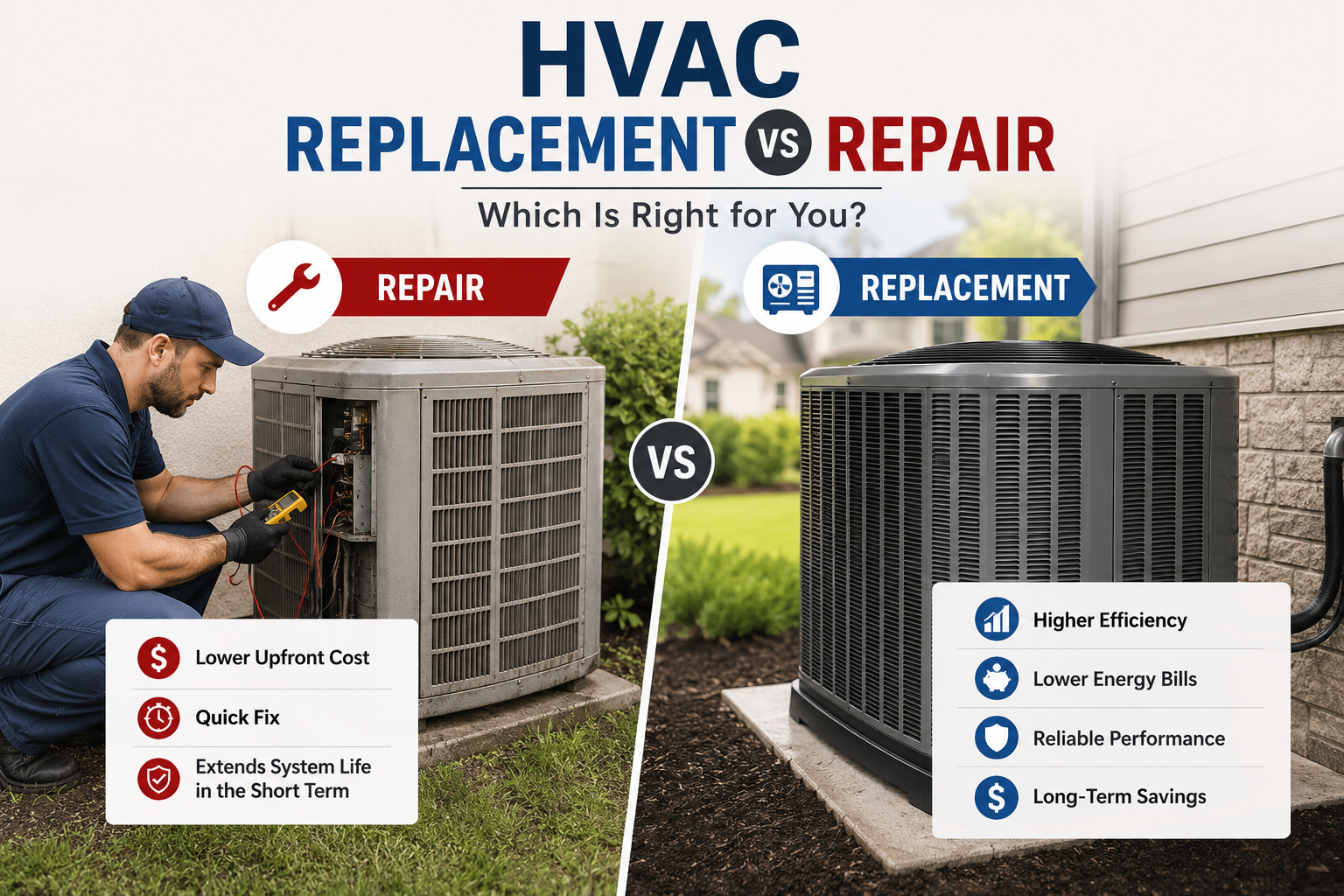
There’s a moment every homeowner dreads: the system sputters, the house won’t cool down, and you’re left staring at two options. Do you patch it up one more time, or is this finally the year you invest in something new? The HVAC replacement decision isn’t just about the immediate breakdown it’s about weighing years of future costs against what’s sitting in front of you right now.
Heading into 2026, that decision has gotten more nuanced. Equipment prices have shifted, efficiency standards have tightened, and older units are becoming pricier to keep alive. This article walks through the practical signs that separate a simple fix from a system that’s genuinely done, plus where other home systems fit into the equation.
Start With the Birth Certificate of Your System
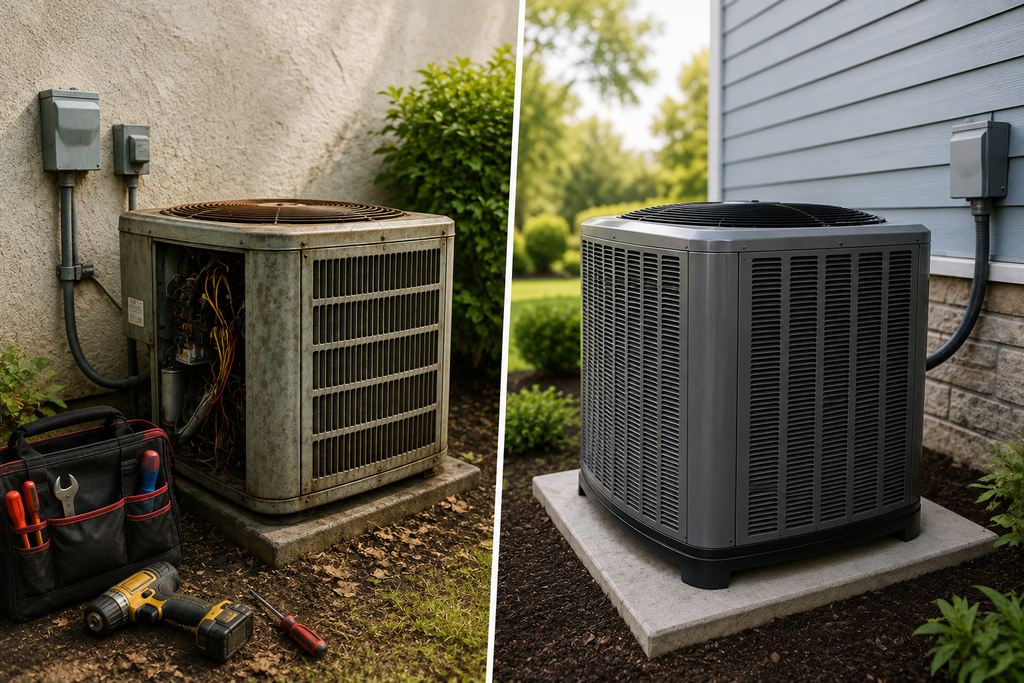
Pull up your installation paperwork if you still have it. Most HVAC equipment is engineered to perform reliably for roughly 12 to 15 years, though plenty of units start struggling well before hitting that mark depending on usage and maintenance history. A unit nearing that ceiling is a poor candidate for another expensive fix.
There’s also a parts-availability problem that creeps up with older equipment manufacturers phase out components and refrigerants, which pushes HVAC repair costs higher simply because technicians have to hunt down obsolete parts. Once you’re at that stage, booking a walkthrough for HVAC installation often turns out cheaper over a ten-year horizon than continuing to nurse an aging unit along.
Count the Service Calls
One repair a year is unremarkable. Three repairs in twelve months tells a different story. Technicians often lean on a rough rule of thumb: once a repair bill climbs past half of what a replacement would cost, you’re usually better off putting that money toward something new instead of extending the life of a failing unit.
This is where a paper trail becomes valuable. Providers who offer HVAC Consulting Services can pull together your repair history and actually run the numbers with you, rather than leaving you to guess whether you’ve crossed that break-even point.
Watch What’s Happening on Your Utility Bill
An unexplained jump in your electric or gas bill is rarely random. As internal components wear down, a struggling system compensates by running longer and harder just to hit the same thermostat setting and that inefficiency shows up directly in your monthly statement.
Modern, energy-efficient HVAC equipment uses variable-speed motors and smarter compressors that sip power compared to units built ten or fifteen years ago. If your bills have been quietly climbing for a couple of seasons with no obvious cause, that’s often the system itself losing steam, and it’s worth having someone take a closer look.
Facing the Number: What Replacement Actually Costs
Nobody loves hearing the number attached to HVAC replacement cost. It’s a real expense, no way around that. But the sticker price only tells part of the story factor in the warranty coverage, the drop in emergency repair calls, and the lower energy bills, and the math often looks better than it did on day one.
The smartest move is getting an itemized quote rather than a ballpark figure over the phone. A good contractor will walk you through different efficiency tiers so you’re choosing a new HVAC system based on what your home actually needs, not paying for capacity or features that don’t apply to your space.
Building or Renovating Changes the Equation Entirely
If you’re breaking ground on a new home or gutting an existing one, the repair-or-replace debate doesn’t really apply you need equipment sized and designed for the space from scratch. Projects involving New Construction benefit enormously from HVAC planning that happens alongside the architectural drawings, not as an afterthought bolted on later.
For bigger or more complicated builds, a Design Build Service folds HVAC design directly into the construction plan. That prevents the classic mistake of squeezing an undersized or oversized system into a finished structure, which almost always leads to uneven temperatures and higher bills for as long as you own the place.
Your Water Heater Is Probably Part of This Conversation Too
HVAC decisions rarely happen in isolation. If your water heater is showing its age at the same time your furnace or AC is struggling, it’s worth looking at both together instead of tackling them months apart. Bundling Water Heater Installation with an HVAC project can streamline scheduling and often trims labor costs.
If you’re seeing lukewarm water, odd banging noises, or a slow leak forming near the tank, don’t shelve that issue while you focus on HVAC alone. A quick Water Heater Repair visit will tell you whether a fix buys you more time, or whether Water Heater Replacement makes more sense to handle in the same project.
Air Quality Deserves a Seat at the Table
A replacement project is also a natural point to fix air quality problems you’ve been living with for years without realizing it. Pairing a new system with better filtration, humidity control, and ventilation can noticeably change the Indoor Air Quality inside your home.
That matters a lot more for households dealing with allergies, asthma, or young kids, since an aging system circulating dust and allergens has a real, cumulative effect on how people feel indoors day to day. Bringing this up during your replacement consultation means you walk away with more than just efficiency gains.
Sometimes the Fix Is Genuinely the Right Call
Replacement isn’t always the answer, and a good technician will tell you that. If your unit is under a decade old, has a clean maintenance record, and the current problem is a single, contained component failure, repair is usually the more sensible path. A blown capacitor or a failing blower motor doesn’t automatically mean your whole system is on its way out.
What matters most is finding a provider who gives you a straight answer instead of steering you toward an upgrade you don’t need. The right contractor lays out both HVAC repair and HVAC replacement options honestly, based on the actual condition of your equipment rather than a sales script.
Bottom Line
The repair-or-replace call hinges on a handful of concrete signals: how old the unit is, how often you’re calling for service, what’s happening to your energy bills, and how the numbers stack up against a new system. Frequent breakdowns paired with a unit past its prime point toward replacement being the wiser long-term bet. A younger system with an isolated issue usually just needs a repair and nothing more.
Whichever direction you land on, partnering with a contractor who handles the full picture HVAC installation and repair, water heater work, and indoor air quality means your home stays comfortable without you having to coordinate three different companies to get there.
Frequently Asked Questions
1. How do I know if I should repair or replace my HVAC system?
Look at three things together: the age of the unit, how frequently it’s needed repairs, and whether your energy bills have crept up. Past 12 years old with repair costs above half the price of a replacement generally points toward replacement.
2. What is the average HVAC replacement cost in 2026?
Pricing depends heavily on system size, efficiency rating, and your home’s square footage, so there’s no single number that applies everywhere. A licensed technician can give you an accurate, itemized quote after evaluating your specific home.
3. How long does a new energy-efficient HVAC system typically last?
With proper installation and regular maintenance, a modern energy-efficient system commonly lasts 15 to 20 years. Brand quality and how consistently you keep up with tune-ups both play a meaningful role in that lifespan.
4. Can I replace my HVAC system and water heater at the same time?
Yes, and many homeowners choose to do exactly that. Combining HVAC and water heater installation or replacement into one project often reduces overall labor costs and keeps the renovation timeline simpler.
5. Does upgrading my HVAC system improve indoor air quality?
It can, particularly when paired with upgraded filtration, humidity control, and ventilation components. Households dealing with allergies or asthma symptoms often notice a real difference in air quality after an upgrade.